Make sure you read the next two updates!
The Hidden Story of GA CD-14: Why the Polls Don’t Tell the Whole Tale - March 1, 2026
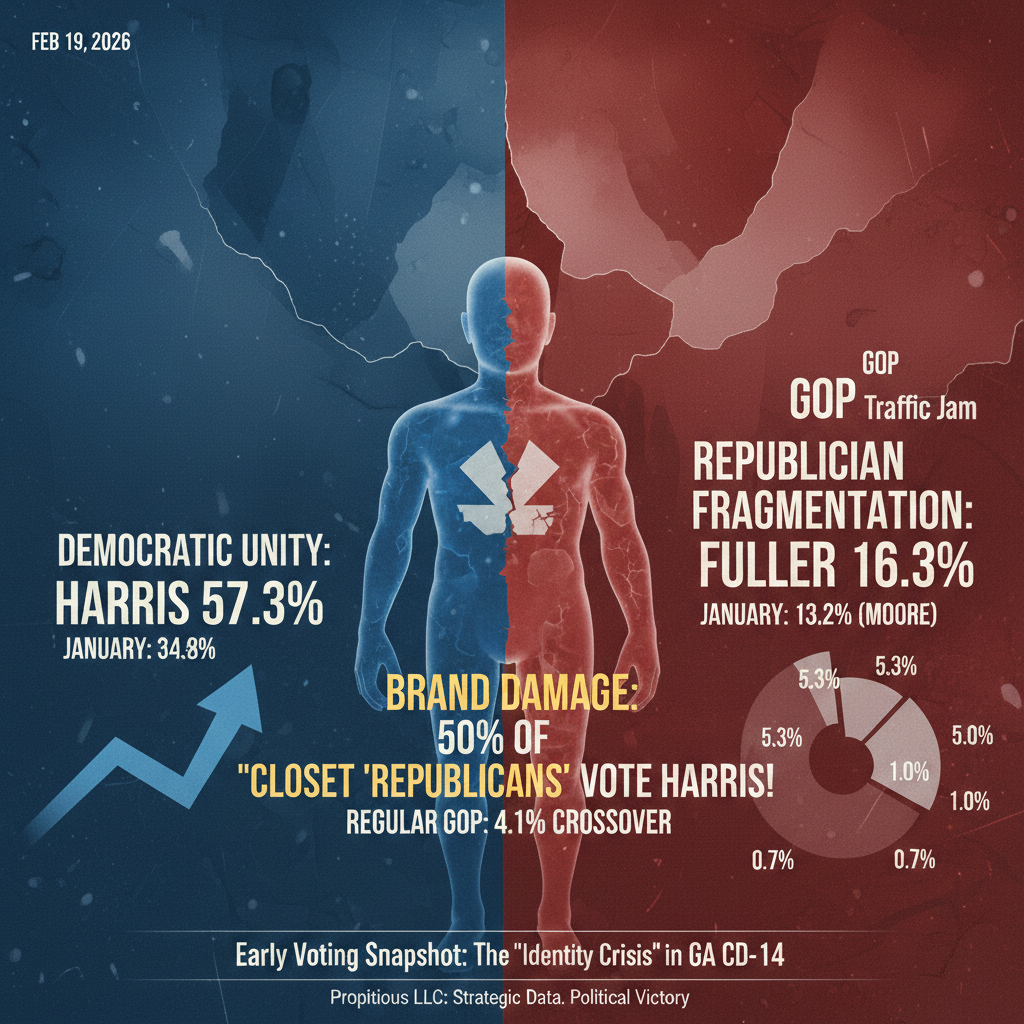
Is Georgia’s 14th Congressional District seeing a surprise Democratic surge, or is there something deeper happening beneath the surface? Recent exit poll data from 28,544 early voters (February 19–27, 2026) initially suggested a 5.5-point lead for Democrat Shawn Harris. However, a closer look at the non-response bias reveals a much different reality: a projected 9.6-point lead for Republicans.
The "Silent" Republican Voter
The discrepancy comes down to who is, and isn't, answering the polling. While the raw poll showed Harris ahead, the actual voter universe is significantly more conservative than the sample of 635 respondents.
- Participation Gap: "Strong GOP" voters made up 50.6% of the non-respondents but only 37.6% of the poll participants.
- The 13-Point Shift: This systematic reluctance of Republican primary participants to respond created a massive 15.1-point "swing" between the raw poll and the projected reality.
Breaking Down the Projected Vote
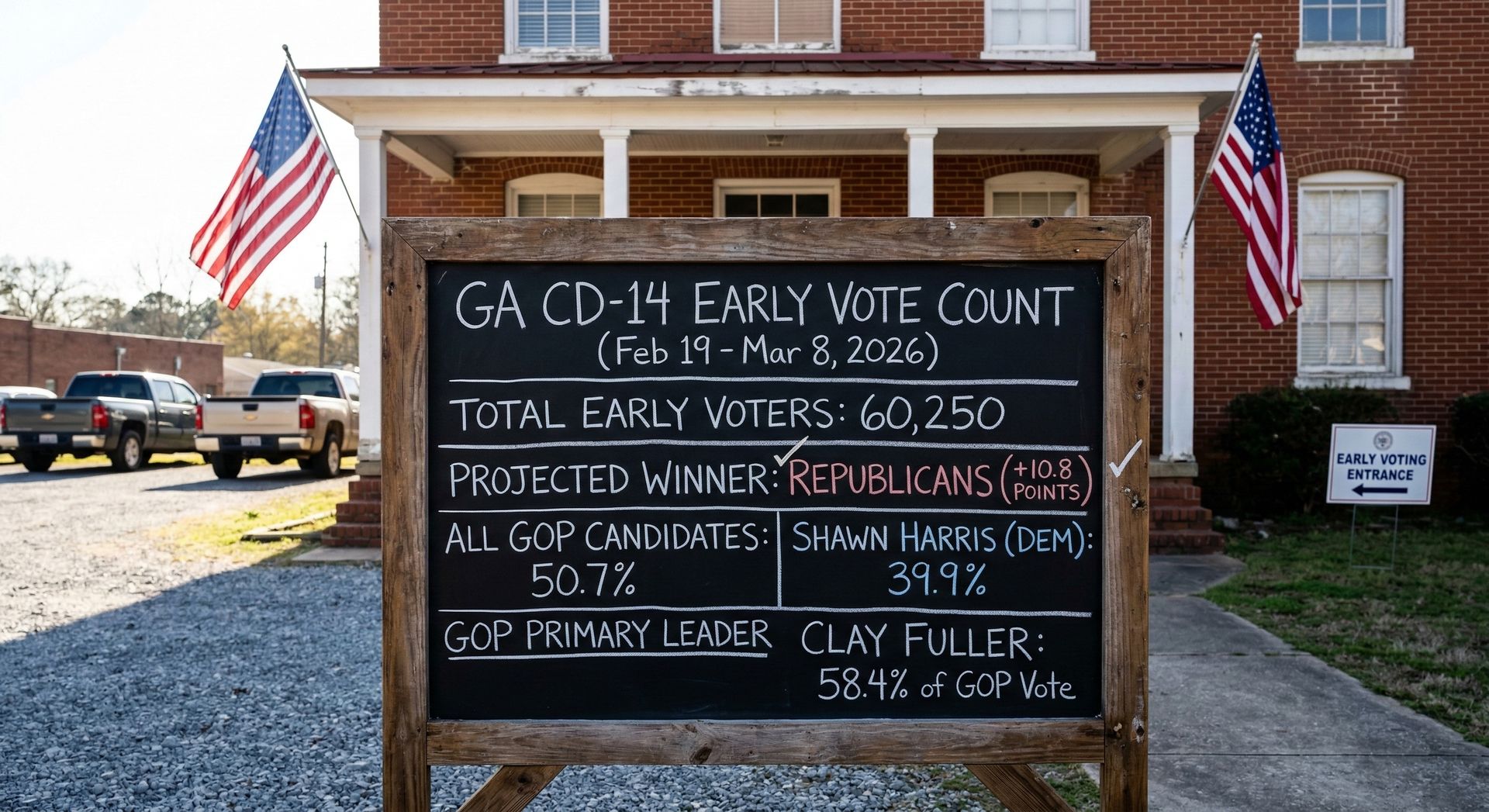
When adjusting for behavioral data and 2024 primary patterns, the combined projection paints a clear picture of GOP dominance in early voting:
- Shawn Harris (D) Projected Vote Share 40.2%
- GOP Combined Field Projected Vote Share 49.8%
- Refused to /Other Projected Vote Share 10%
Among the Republican contenders, Clay Fuller leads the pack with 28.9%, followed by Colton Moore at 11.8%.
Is Momentum Shifting?
While the overall projection favors Republicans, the week-by-week data suggest the race is tightening. In Week 1 (Feb 19), the GOP lead was a commanding 11 points. By Week 2 (Feb 26-27), that margin narrowed to 5.8 points, hinting at potential Democratic momentum as the election progresses.
Why This Matters for 2026
This analysis by Propitious LLC highlights the "polling paradox" facing modern elections. In a district like GA CD-14, relying on raw response data can lead to a "Democratic-leaning sample" that doesn't reflect the actual electorate.
Are we seeing a genuine shift in voter sentiment, or is the "GOP non-response bias" becoming a permanent fixture of Georgia politics? To understand the full impact of these early voting patterns, we have to look past the headlines and into the data models.