In political data, if you aren't humble, the electorate will gladly do the job for you.

On my desk is a small clipping of a headline from the Wall Street Journal from back in the '90s. It says: "Ignore Your Pride, Ego: Market Always Rules." In political data, the market is the voter, and the Election Day voter drives the ship. It is true that direction can be found with brushfire and exit polls, but unknown variables and real-time voter turnout can always throw a curveball.
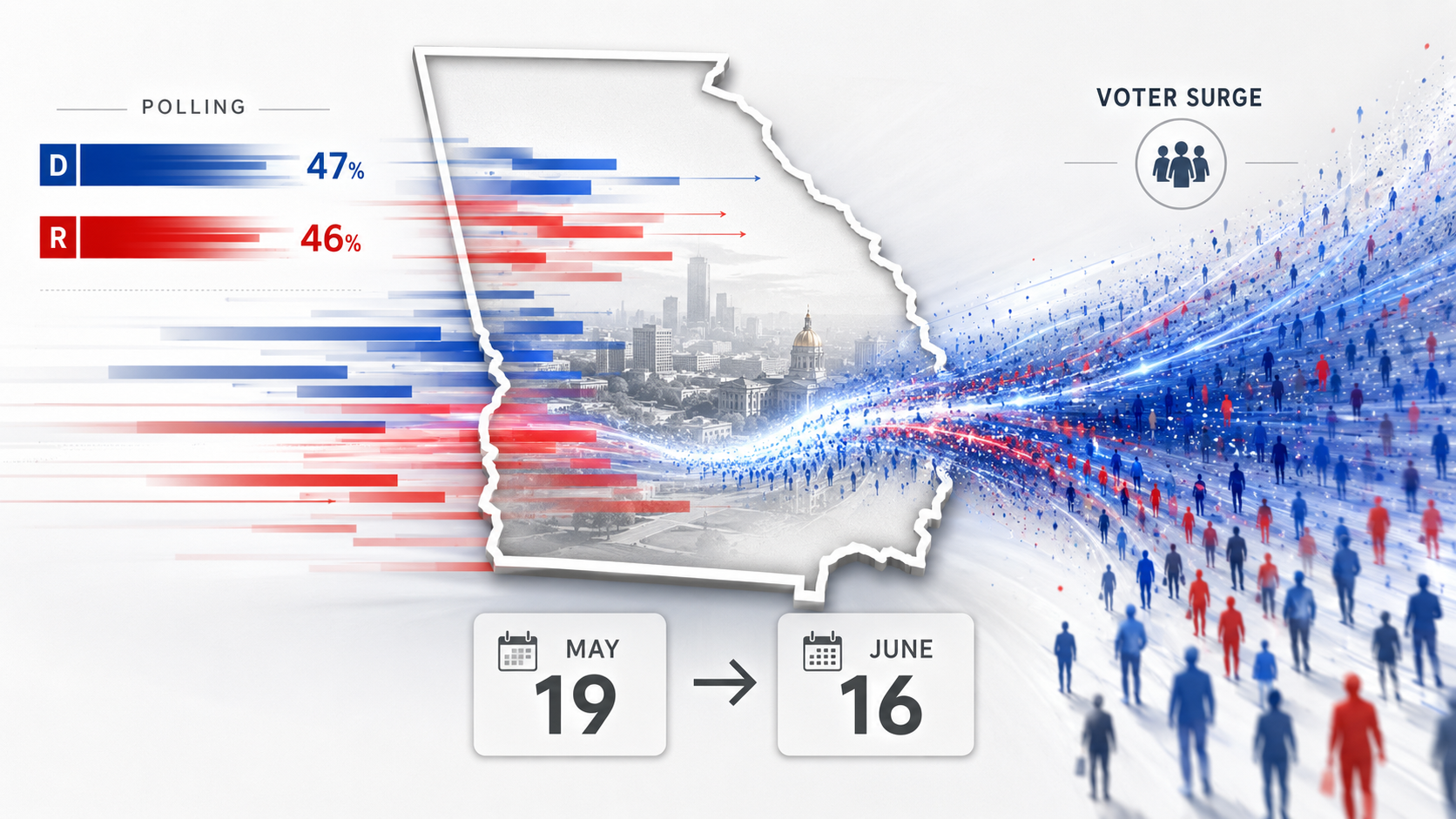
As the final Georgia primary election results trickled in, voters across the state were left asking one major question: who won the Republican primary in Georgia? Looking at the numbers from the Georgia GOP primary, a newly deployed 5-wave early-voting exit poll ($n=2,907$) achieved its primary mission: it correctly identified every single runoff matchup on the ballot. But a look at the final scoreboard shows that Election Day voters had the final say, flipping the order in major races and reminding everyone why early-vote data is only half the puzzle.
For those checking the Georgia election results today, here is a balanced look at where the early data got it right, and where the Election Day surge shifted the ground.
1. Georgia Governor Primary: The Matchup Was Right, the Order Flipped
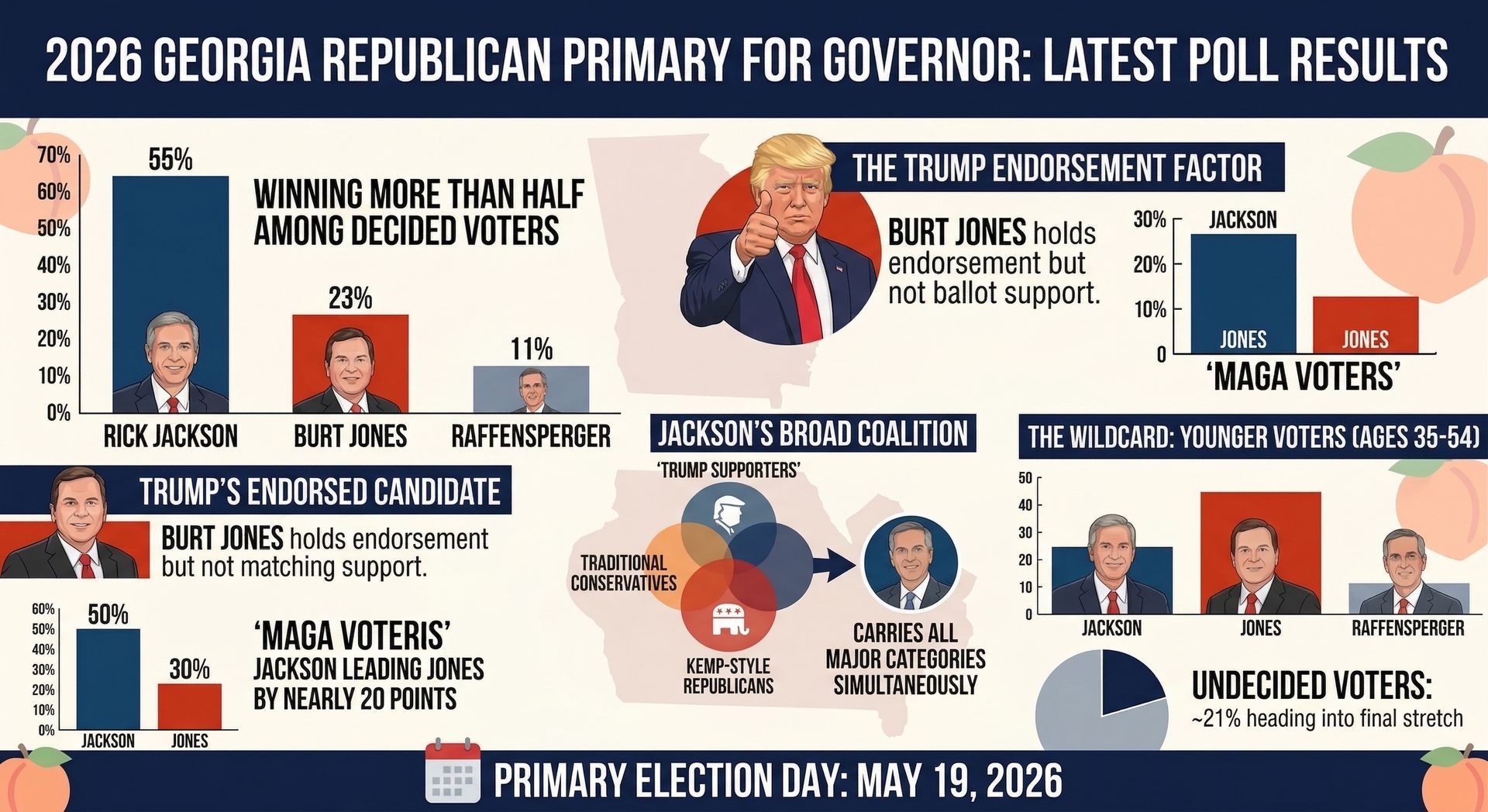
- The Early Poll: Rick Jackson 36.9%, Burt Jones 31.1%
- The Actual Result: Burt Jones (~38.3%), Rick Jackson (~32.5%)
- The Reality Check: For those wondering who won the Georgia primary for Governor, the model correctly predicted a Jackson-Jones runoff, but missed the final order. The early-vote data accurately captured Jackson’s strength with traditional, older early voters. However, Election Day momentum swung heavily to Jones, completely reversing the top spot. It’s a win on the matchup, but a clear lesson in Election Day volatility.
2. Lieutenant Governor Primary Results: Capturing the Contenders
- The Early Poll: Greg Dolezal 29.9%, John F. Kennedy 25.9%
- The Actual Result: John F. Kennedy (~27.3%), Greg Dolezal (~23.1%)
- The Reality Check: Once again, the poll successfully put the right two candidates in the runoff. While the tracking waves picked up genuine late momentum for Dolezal during early voting, Kennedy commanded the Election Day turnout to take the actual first-place finish in the primary election Georgia results.
3. Secretary of State: Spotting the Runoff Floor
- The Early Poll: Vernon Jones 29.2%, Tim Fleming 25.0%
- The Actual Result: Tim Fleming (~39.2%), Vernon Jones (~27.3%)
- The Reality Check: The poll rightly anticipated that Vernon Jones had a solid baseline floor to make the runoff, and identified Fleming as the chief competitor. What the early data couldn't fully capture was the sheer scale of Fleming’s Election Day surge, which cleared Jones by double digits in the final primary results.
4. Public Service Commission (Dist. 5): The Best Call of the Night
- The Early Poll: Josh Tolbert 55.0% (of decided, but 31% overall due to a 43% skip rate)
- The Actual Result: Josh Tolbert (~47.2%), Bobby Mehan (~31.1%)
- The Reality Check: This is where raw data discipline paid off. While a surface-level glance at the early vote suggested Tolbert might clear the 50% threshold, the analysis flagged the massive 43% undervote (skips) and correctly forecasted that he would fall short, forcing a runoff with Mehan.
The Takeaway on the Georgia Primary Results
Nailing four for four on runoff matchups in a crowded primary is a serious win for a boutique methodology, but the flips in the top spots keep things grounded. Early voting and Election Day voting are increasingly looking like two entirely different electorates in Georgia.
The model proved it can spot the trends and identify the finalists, but until the final Election Day data is fully reconciled and integrated, the precise order remains a wild card. The baseline is solid—now it's time to refine the model for the runoffs. I rate this a win, sort of, but not a complete success.